


What is Freediving? Beginner’s Guide to Breath-Hold Diving
Candace Reno August 12th, 2026 Posted In: Articles
Sometimes life is easier and more enjoyable when you’re exploring the underwater world without a bunch of gear. Maybe you’ve heard or seen things like snorkeling vs scuba diving, and you’re wondering if there’s an in-between way to enjoy the water at certain depths. This is where freediving comes in!
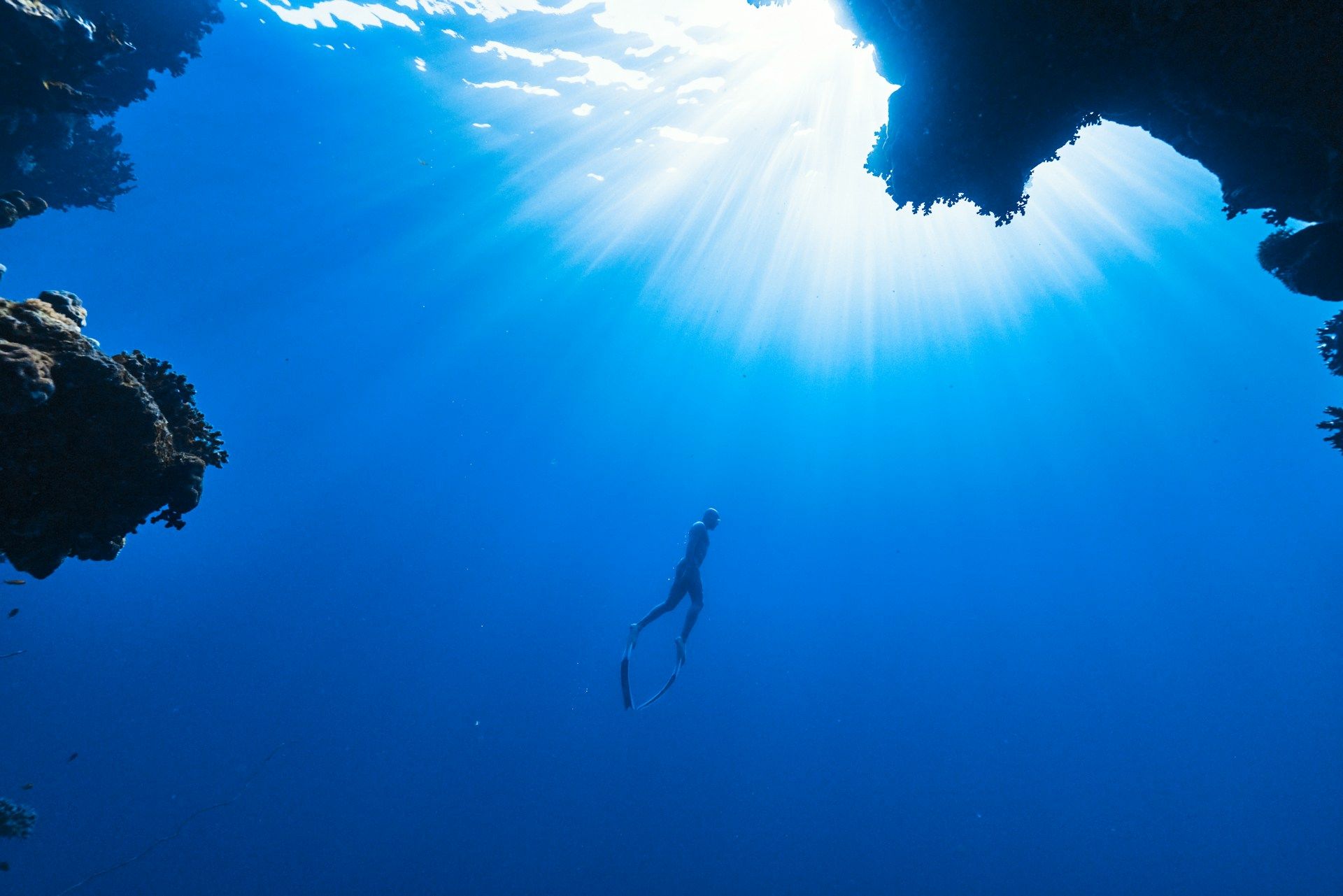
What is Freediving?
Freediving is the practice of diving underwater on a single breath, without a tank or breathing apparatus. Unlike scuba diving, freedivers rely on breath-holding, relaxation, and efficient movement to explore underwater. Despite its reputation as an extreme sport, freediving isn’t only for elite athletes. With proper instruction and consistent practice, many beginners can comfortably progress to depths of 10–20 meters within their first few months of training.
For many people, freediving is less about pushing physical limits and more about experiencing the underwater world in a quiet, minimalist way. There is no regulator, noisy bubbles, or heavy equipment—just you, your breath, and the water.
Freediving vs. Scuba Diving: What’s the Difference?
The biggest difference between freediving and scuba diving is simple: freedivers hold their breath, while scuba divers breathe from an underwater tank.
| Freediving | Scuba Diving |
| One breath per dive | Continuous breathing from a tank |
| Minimal equipment | More equipment and gear |
| Shorter time underwater | Longer bottom time |
| Quiet and streamlined | Mechanical breathing sounds |
| Focuses heavily on relaxation and breath control | Focuses on buoyancy, air management, and dive skills |
Neither sport is inherently better. Freediving offers a minimalist, meditative experience and makes it easy to move through the water with relatively little equipment. Scuba diving, meanwhile, allows you to stay underwater for much longer and is excellent for exploring deeper reefs, wrecks, and marine environments.
Types of Freediving: Which One Is Right for Beginners?
Recreational freediving is where most newcomers begin. It involves exploring reefs, observing marine life, and extending the depth and duration of traditional snorkeling. The emphasis is generally on enjoyment, relaxation, and safe progression rather than competition.
Spearfishing combines breath-hold diving with underwater hunting. It has become a major part of the freediving community and requires additional knowledge of hunting techniques, local regulations, and ocean safety.
Competitive freediving includes pool disciplines such as static apnea and dynamic apnea, along with open-water disciplines including constant weight (CWT) and free immersion (FIM). Competition can involve significant depths and long breath-holds, so these disciplines should be approached only after proper training.
Underwater photography and videography are also increasingly popular. Freedivers can quietly approach marine life and remain streamlined while capturing underwater footage, making breath-hold diving particularly useful for photographers.
Is Freediving Safe? The Honest Answer for Beginners
Freediving can be safe when it’s practiced correctly, but it is not a sport to learn by simply watching videos and experimenting alone.
The most serious risk or dangers of freediving is shallow water blackout, a loss of consciousness caused by insufficient oxygen, which can occur particularly during the final part of an ascent. The risk becomes much greater when someone dives alone, pushes beyond their limits, or uses unsafe breathing practices.
There are three rules every beginner should treat as non-negotiable:
- Never freedive alone. Always dive with a properly trained buddy who can recognize problems and perform a rescue.
- Never hyperventilate before a dive. Excessive breathing can suppress the body’s warning signals without meaningfully increasing the oxygen available for a breath-hold.
- Progress gradually. Don’t chase depth or breath-hold records. Your technique and comfort should develop before your depth does.
Organizations including AIDA, SSI, and PADI offer beginner freediving courses. A typical Level 1 course introduces breathing and relaxation techniques, equalization, pool static apnea, and supervised open-water diving. Depending on the course, beginners may work toward depths around 10–20 meters, often completing initial instruction in two or three days.
You don’t need to be an elite swimmer to start. Being in good general health and feeling comfortable and confident in the water are much more important. A certified instructor can teach you techniques that are difficult—and potentially dangerous—to learn through trial and error.
What Gear Do You Need for Freediving?
One of the appeals of freediving is that you don’t need a huge collection of equipment. A few specialized pieces make a major difference.
1. Freediving Wetsuit
A freediving wetsuit is one of the most important pieces of specialized equipment. Freediving suits typically use open-cell neoprene, which has no conventional fabric lining on the inside and sits directly against the skin. This provides excellent insulation while allowing the suit to fit closely to the body.
Freediving wetsuits are also designed with streamlined profiles to reduce drag. Common thicknesses include 3mm and 5mm, although the right choice depends on water temperature and personal comfort.
A surf or scuba wetsuit isn’t necessarily a good substitute. Freediving suits are designed around flexibility, hydrodynamics, compression, and breath-hold diving. Many have no traditional back zipper and use specialized thickness profiles. For serious freediving, choose a suit specifically designed for the sport.
2. Low-Volume Mask
A low-volume mask sits close to your face and contains less air than many conventional masks. That means less air is needed to equalize the mask as you descend.
3. Long-Blade Fins
Long freediving fins generate more propulsion per kick than typical snorkeling fins. This allows efficient movement while minimizing unnecessary exertion, which is important when you’re trying to conserve oxygen.
4. Weight Belt
A weight belt can help a freediver achieve appropriate buoyancy, particularly when using a thick wetsuit. Weight must be used carefully and matched to the diver, suit, and environment.
Beginner Tips for Your First Freedive
- Relax first. Tension and unnecessary movement increase oxygen consumption. A calm, relaxed body is one of the foundations of efficient freediving.
- Equalize early and often. Don’t wait until your ears hurt before equalizing. Learn proper equalization technique from an instructor and begin early during your descent.
- Start shallow. Build depth gradually across multiple sessions rather than trying to reach an impressive number immediately.
- Always use a trained buddy. Your buddy isn’t simply someone who happens to be swimming nearby. They should understand freediving safety and know how to respond if something goes wrong.
Before entering the water, spend time warming up and practicing relaxed breathing. The goal isn’t to force a massive breath-hold but to become calm, comfortable, and prepared.
For many beginners, the most memorable moment comes when they reach the bottom, stop moving, and look upward at sunlight filtering through the surface. That sense of silence and weightlessness is one of the most peaceful experiences in water sports.
Start Freediving the Right Way
Freediving is accessible to beginners, but its simplicity shouldn’t be confused with a lack of technique. The sport rewards patience, relaxation, efficient movement, and good safety habits far more than brute strength or long breath-holds.
If you’re curious about freediving for beginners, the best first step is to find a qualified instructor and take a beginner course. Learn the fundamentals, practice with a trained buddy, and let your depth develop naturally. The underwater world will still be there and learning to experience it safely is part of the adventure!
Frequently Asked Questions
What is the difference between freediving and scuba diving?
The biggest difference is how you breathe underwater. Freedivers hold their breath and descend without a breathing apparatus, while scuba divers breathe continuously from a tank through a regulator. Freediving generally involves less equipment and shorter time underwater, while scuba allows divers to remain submerged for much longer periods and carry out deeper or more equipment-intensive dives.
Is freediving dangerous for beginners?
Freediving can be practiced safely by beginners when proper training and safety procedures are followed, but it does carry serious risks. The most significant is shallow water blackout, which can cause a diver to lose consciousness, particularly near the end of an ascent. Beginners should never freedive alone, should never hyperventilate before a dive, and should learn breath-hold and rescue techniques from a qualified instructor before attempting deeper dives.
How deep can a beginner freediver go?
There is no single depth that every beginner should aim for. A beginner’s safe depth depends on training, equalization ability, experience, and individual comfort in the water. Introductory freediving courses may work toward depths around 10–20 meters (33–66 feet), but reaching a particular number should never be the goal. Beginners should progress gradually under qualified supervision rather than trying to match someone else’s depth.
Do you need a special wetsuit for freediving?
A dedicated freediving wetsuit is recommended, particularly once you move beyond occasional snorkeling or recreational breath-hold diving. Freediving suits are typically made with flexible open-cell neoprene and are designed to reduce drag while providing warmth and freedom of movement. The appropriate thickness depends on the water temperature and your personal tolerance for cold. A properly fitted suit is especially important because freedivers spend significant time moving efficiently and maintaining a streamlined position underwater.
Do you need a certification to freedive?
Certification is not universally required by law to participate in freediving, but formal training is strongly recommended—especially for beginners. Organizations such as AIDA, SSI, and PADI offer structured freediving courses that teach essential skills including breath-hold technique, equalization, safety, buddy procedures, and rescue awareness. Taking a course with a qualified instructor is one of the best ways to learn the sport safely and build your skills progressively.