


How to Duck Dive a Surfboard: Step-by-Step Guide for Beginner Surfers
Lauren June 12th, 2026 Posted In: How-To Tags: Surfing
You’re paddling out toward the lineup when you see it – a wall of whitewater charging straight at you. Every surfer has been there. At that moment, you have two choices: get pushed backward by the wave or get underneath it and keep moving forward.
That’s exactly where knowing how to duck dive comes into play!
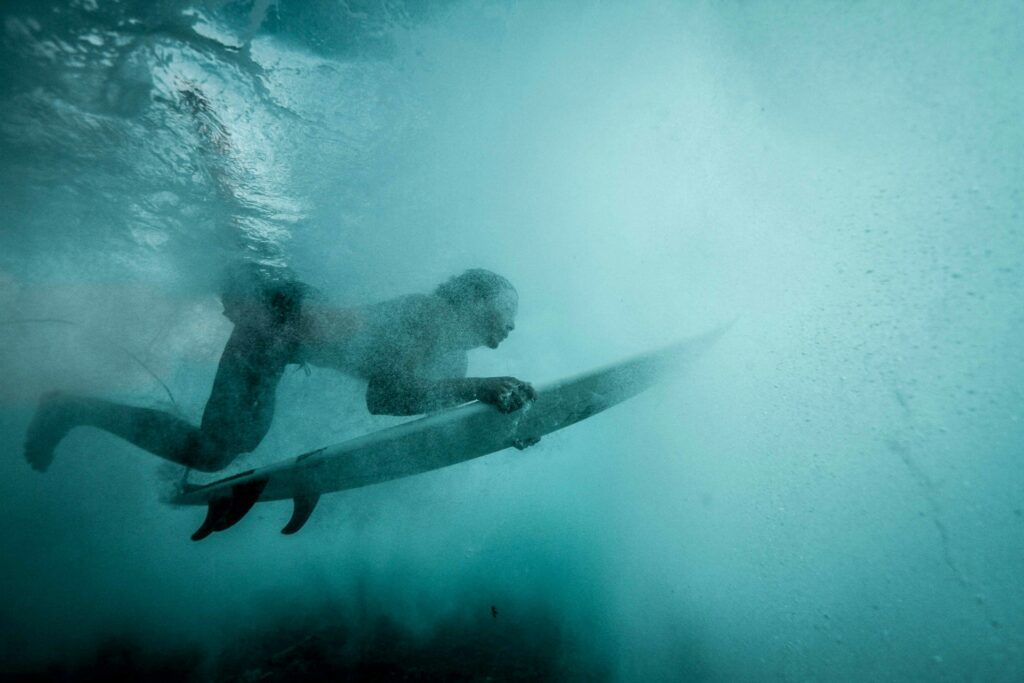
A duck dive is the surfing technique of pushing your surfboard beneath an approaching wave so you can pass underneath the turbulence and continue paddling toward the lineup. It’s one of the most important skills beginner surfers can learn because it saves energy, improves positioning, and helps you spend more time catching waves instead of fighting them. But we’re getting ahead of ourselves here.
Before we dive in, it’s important to know that duck diving doesn’t work for every surfboard. Generally, duck dives are best suited for shortboards and some mid-length boards with lower volume. If you’re riding a longboard or large foam board, you’ll likely need to use a turtle roll instead.
Let’s break it down step-by-step below, shall we?
Quick Highlights on Duck Diving
- A duck dive allows surfers to pass underneath breaking waves instead of getting pushed back toward shore.
- Duck dives work best on shortboards and lower-volume mid-length boards.
- Proper timing and momentum are often more important than strength.
- Learning how to duck dive a surfboard can dramatically improve your ability to reach the lineup.
- If your board has too much volume to sink, you’ll need to use a turtle roll instead.
- A flexible, properly fitting wetsuit helps maximize your range of motion during duck dives.
What Is a Duck Dive and Why Does It Matter?
When you’re paddling through incoming waves, trying to power straight through the breaking whitewater rarely works. Waves contain a tremendous amount of energy, and even small surf can quickly drain your arms if you’re constantly getting pushed backward.
A duck dive allows you to use your board’s shape, buoyancy, and your body weight to slip underneath the turbulent water rather than fighting against it. Think of it like taking a shortcut under traffic instead of trying to run through it.
Mastering the duck dive is often the difference between making it out to the lineup efficiently and spending your entire session battling whitewater. It’s one of the most valuable beginner surfing tips you can learn after mastering paddling and popping up on your board.
Duck Dive vs. Turtle Roll: Which One Do You Need?
One of the most common beginner questions is duck dive vs turtle roll. The answer usually comes down to board size and volume.
Use a Duck Dive If:
- You’re riding a shortboard
- You’re on a lower-volume fish or hybrid
- You’re riding a mid-length under roughly seven feet
- You can comfortably push the nose underwater
Use a Turtle Roll If:
- You’re riding a longboard
- You’re using a foam board
- Your board has too much volume to sink
- You cannot push the nose underwater with straight arms
A good rule of thumb: if the board won’t go underwater easily, don’t force it. Use a turtle roll instead.
Before You Start: What You Need
Before learning how to duck dive a surfboard, make sure you have a few basics covered.
First, you should already feel comfortable paddling efficiently. A duck dive relies heavily on momentum, so poor paddling technique can make the maneuver much harder than it needs to be.
You’ll also want some experience handling small whitewater waves before attempting duck dives in larger surf.
Finally, don’t overlook your gear. A flexible surfing wetsuit can make a noticeable difference. If your wetsuit is too tight through the shoulders or chest, it can restrict the movement needed to push the board underwater effectively. The best surf wetsuits allow a full range of motion while still keeping you warm and comfortable!
How to Duck Dive: Step-by-Step
Now let’s get down to what you’re really here about – the step-by-step process for performing a successful duck dive!
Step 1: Paddle Hard Toward the Wave
Momentum is your friend.
As the wave approaches, take three to four strong paddle strokes. A slow entry often leads to failed duck dives because you don’t have enough forward speed to carry you underneath the wave.
Step 2: Time Your Entry
Just like most things in life, timing is everything.
Begin your duck dive when the wave is approximately two to three feet away. Too early and you’ll surface before the wave passes. Too late and the wave will hit you before you’re submerged.
Step 3: Grip the Rails
Place both hands on the rails of your board about a foot behind the nose. Keep your arms straight and position your shoulders directly over the board.
Step 4: Push the Nose Under
Using your body weight – not just your arm strength – drive the nose downward into the water. Your goal is to sink the front of the board approximately one to two feet beneath the surface.
Step 5: Push the Tail Down
As the nose submerges, use your back foot on the traction pad (or your knee if necessary) to push the tail underwater.
This is the step many beginners forget. The goal is to get the entire board submerged and nearly parallel to the ocean floor.
Step 6: Angle Back Up
As the wave passes overhead, begin angling the nose upward toward the surface. The board’s natural buoyancy will help carry you upward.
Step 7: Resurface and Keep Paddling
As soon as you emerge behind the wave, get back into paddling mode. Often another wave is right behind the first one, so staying efficient is critical.
Common Duck Dive Mistakes (And How to Fix Them)
Even experienced surfers occasionally blow a duck dive. Here are some of the most common mistakes beginners make:
Not Paddling Hard Enough
The problem: You don’t have enough momentum to carry through the wave.
The fix: Sprint paddle for the final few strokes before initiating the dive.
Initiating Too Late
The problem: The wave crashes into you before you’re fully underwater.
The fix: Start your duck dive slightly earlier than you think you need to.
Not Getting the Nose Deep Enough
The problem: The wave catches the front half of your board.
The fix: Use your body weight rather than relying solely on arm strength.
Forgetting to Push the Tail Down
The problem: Only half of the board submerges.
The fix: Focus on sinking both ends of the board.
Surfacing Too Soon
The problem: The wave’s turbulence grabs you on the way up.
The fix: Stay underwater just a split second longer before allowing the board to rise.
How to Practice Duck Diving
The good news is you don’t need overhead surf to practice duck dives. Start in flat water by simply practicing the motion of sinking your board beneath the surface. This helps build muscle memory without the pressure of incoming waves.
Once you’re comfortable, move into small whitewater conditions and practice repeatedly. Repetition is what builds confidence.
It’s also worth noting that upper-body strength helps (in fact, there are lots of health benefits of surfing). You don’t need to be a gym rat, but stronger shoulders, chest, and triceps make it easier to push the board deeper into the water.
Most importantly, be patient. Learning how to duck dive is one of those surfing skills that feels awkward at first and then suddenly clicks after enough repetitions.
Why Learning How to Duck Dive Makes Surfing More Fun
If you’re serious about improving your surfing, learning how to duck dive a surfboard should be high on your priority list.
A proper duck dive conserves energy, improves your positioning, and helps you spend less time getting pushed around by waves and more time actually surfing them. While it may take some practice to perfect your timing and technique, the payoff is enormous once it becomes second nature.
For beginner surfers, it’s one of the most valuable skills you can add to your toolkit. Combine strong paddling, wave awareness, and a reliable duck dive, and you’ll be reaching the lineup with far more confidence—and far less frustration.
So the next time you see a wave bearing down on you, don’t panic. Take a few strong strokes, commit to the dive, and head straight underneath it! You’ve got this!
FAQ: Duck Diving
What is a duck dive in surfing?
A duck dive is a surfing technique used to push a surfboard underneath an incoming wave so the surfer can pass beneath the turbulence and continue paddling toward the lineup.
Can you duck dive a longboard?
Generally, no. Most longboards have too much volume to push underwater effectively. Longboard surfers typically use a turtle roll instead.
How do you time a duck dive?
Start your duck dive when the wave is roughly two to three feet away. This gives you enough time to submerge before the wave reaches you.
Why does my duck dive not work?
The most common causes are poor timing, lack of momentum, not pushing the nose deep enough, or forgetting to sink the tail of the board.
What is the difference between a duck dive and a turtle roll?
A duck dive involves pushing the board underwater and passing beneath the wave. A turtle roll involves flipping the board upside down and holding onto it while the wave passes overhead.