


Snorkeling vs. SCUBA Diving: Which Is Right for You?
Candace Reno June 17th, 2026 Posted In: Articles Tags: SCUBA
When you love the water, you just know it! The world beneath the ocean’s surface is a breathtaking landscape of vibrant coral reefs, ancient shipwrecks, and mesmerizing marine life. For anyone seeking to explore this aquatic realm, two primary pathways exist: snorkeling and SCUBA diving.
While both activities offer a front-row seat to the wonders of the deep, they require vastly different levels of commitment, financial investment, physical preparation, and technical skill. Choosing between them depends heavily on your budget, comfort level in the water, and just how deeply you want to immerse yourself in the marine environment.
So, if you’re wondering what the difference between snorkeling and SCUBA diving is, we’ve got you! Or you have questions like is snorkeling easier than SCUBA diving? Well, you’ve come to the right place! Read on for more about snorkeling vs SCUBA diving and which is right for you.
Snorkeling: The Gateway to the Underwater World
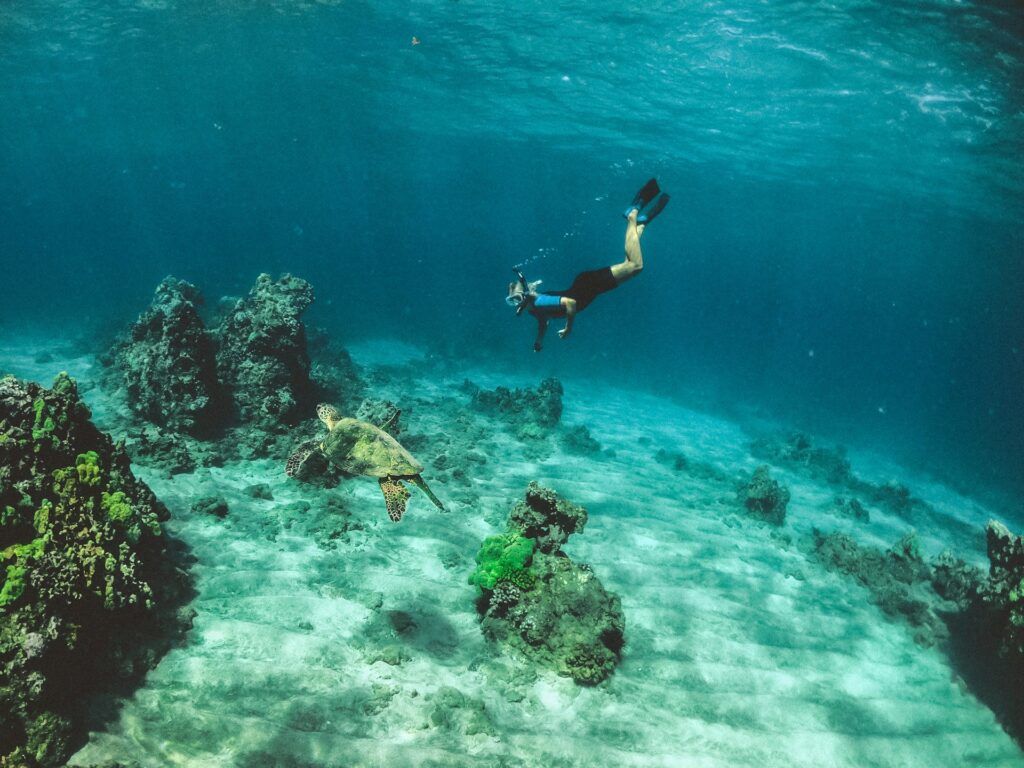
Snorkeling is the most accessible way to observe underwater life from the surface. You float face down on the water, breathing through a shaped tube while peering through a clear mask. It provides a panoramic view of shallower ecosystems without isolating the observer from the open air above.
How to Do It
Getting started with snorkeling is remarkably straightforward. The basic technique involves floating horizontally on your stomach, keeping your lower back relaxed, and kicking slowly with long, steady strokes from your hips rather than bending your knees.
To breathe, you simply bite down gently on the silicone mouthpiece of the snorkel, sealing your lips around it, and take slow, deep breaths. If a wave washes over you or water slips into the tube, you can forcefully exhale—a technique known as “purging”—to clear the airway, or simply lift your head out of the water to drain it. It is a relatively safe experience with the right equipment.
Pros of Snorkeling:
- Minimal Equipment & Cost: You only need a mask, snorkel, and fins, which can be rented cheaply or purchased for under $50. A snorkeling wetsuit is not always required, but it can add warmth and protection from the sun.
- No Certification Required: Anyone who can swim—and even non-swimmers equipped with a flotation vest—can enjoy snorkeling immediately without formal training.
- Freedom and Agility: Without heavy gear strap-ons, you can effortlessly hop into the water from a beach or boat and move with total freedom.
Cons of Snorkeling:
- Surface Limitations: You are fundamentally bound to the surface. While you can take a breath and dive down briefly, you must quickly return to the top air supply.
- Distance from the Action: In deeper waters, marine life can look distant, muted, or blurred, restricting your interaction with bottom-dwelling species.
SCUBA Diving: Complete Submersion
SCUBA (Self-Contained Underwater Breathing Apparatus) diving takes you beyond the surface barrier, allowing you to descend into the ocean depths and breathe underwater for extended periods. It transforms you from an observer looking down into an active participant floating weightlessly through a beautiful underwater world.
How to Do It
Unlike snorkeling, SCUBA diving requires formal instruction and technical mastery. Divers wear a specialized buoyancy control device (BCD) jacket, an air cylinder (tank), and a regulator system that delivers pressurized air to the mouth allowing the diver to breathe. Most often, a SCUBA diving wetsuit of varying thickness is required to keep you warm while diving.
To dive safely, you must learn to manage your buoyancy using the BCD and your lung volume, achieve weightlessness, and carefully monitor your depth and remaining air supply. Additionally, divers must master “equalization”—adding air to internal air spaces like the ears and sinuses via gentle blowing against pinched nostrils—to combat increasing water pressure during descent.
Pros of SCUBA Diving:
- True Immersion: You can stay at depth for up to an hour, sometimes longer, exploring caves, deep reefs, and historic wrecks alongside marine life that ignores your presence.
- The Feeling of Weightlessness: Achieving neutral buoyancy mimics the feeling of floating in outer space, offering an unparalleled sense of tranquility.
- Deeper Discoveries: Many of the ocean’s most bizarre and beautiful creatures live far beyond the reach of sunlight and surface snorkelers.
SCUBA Diving Cons:
- High Costs & Equipment Dependency: SCUBA involves expensive gear rentals or purchases and ongoing costs for air fills and boat charters.
- Rigorous Certification & Safety Risks: You must complete a multi-day certification course (such as PADI or SSI). Failure to follow safety protocols can lead to serious decompression sickness, barotrauma, or even death.
The Golden Rule of SCUBA: Never hold your breath while SCUBA diving. Because the air you breathe is pressurized, expanding air during an ascent can cause severe lung damage if not allowed to escape naturally through continuous breathing.
Snorkeling vs SCUBA Diving: Which One is Right for You?
To determine which experience aligns with your desires, evaluate your personal comfort, timeline, and goals.
- Choose Snorkeling if: You are looking for a casual, low-stress, and family-friendly activity during a vacation. It requires zero preparation and lets you enjoy the vibrant life of shallow coral gardens at your own pace without financial stress.
- Choose SCUBA Diving if: You possess a deep curiosity for exploration, feel highly confident in deep water, and want to experience the sensation of flying through an aquatic ecosystem. While the barrier to entry is higher, the reward is an unparalleled, unrestricted pass to the remaining 70 percent of our planet.
Quick Comparison of Snorkeling vs SCUBA Diving
| Feature | Snorkeling | SCUBA Diving |
| Primary Location | Water surface (~0–15 feet deep) | Underwater depths (~15-130+ feet) |
| Training Needed | None (Basic swimming comfort) | Formal Certification Course (PADI/SSI, etc) |
| Gear Complexity | Low (Mask, snorkel, fins) | High (Tank, regulator, BCD, computer) |
| Time Underwater | Limited to single breath-holds | Depends |
Is Snorkeling Easier Than SCUBA Diving?
In most cases, yes—snorkeling is easier than SCUBA diving. The barrier to entry is much lower because snorkeling requires minimal equipment, no certification, and very little planning. Most people can learn the basics in just a few minutes.
That said, good snorkeling is still a skill. Learning how to clear a snorkel, conserve energy while kicking, and remain comfortable in open water takes practice.
SCUBA diving generally feels more challenging at first because divers must complete certification training, learn safety procedures, and become familiar with specialized equipment. However, many certified divers find SCUBA easier once they’re underwater because breathing through a regulator becomes second nature and proper buoyancy control allows for effortless movement.
The biggest difference is that the learning curve for SCUBA diving is front-loaded. Once you’ve completed your training and gained experience, the underwater experience itself often feels surprisingly natural.
Figuring Out What to Wear for SCUBA and Snorkeling
The right gear can make a huge difference in comfort, warmth, and overall enjoyment. Whether you’re snorkeling on a tropical vacation or descending on a deep-water dive, gear still matters!
What to Wear for Snorkeling
In warm tropical destinations, many snorkelers are comfortable wearing a rash guard and swimwear. However, even warm water can feel chilly after extended periods of time in the ocean.
A lightweight snorkeling wetsuit, typically around 2mm thick, can provide additional warmth, buoyancy, and protection from sun exposure, jellyfish stings, and reef abrasions. In cooler environments, a thicker wetsuit may be necessary.
What to Wear for SCUBA Diving
SCUBA divers spend longer periods underwater and often encounter colder temperatures at depth, making thermal protection much more important.
Depending on water temperatures and dive conditions, divers commonly wear wetsuits ranging from 3/2mm up to 7mm or thicker. Choosing the correct wetsuit thickness helps improve comfort, safety, and bottom time.
Snorkeling vs SCUBA Diving: Choosing the Right Underwater Adventure
When comparing snorkeling vs SCUBA diving, there isn’t a single “best” option—only the option that’s best for your goals, comfort level, and budget.
If you’re looking for a simple, affordable, and family-friendly way to experience marine life, snorkeling is hard to beat. If you’re ready to invest in training and want access to deeper reefs, shipwrecks, and longer underwater adventures, SCUBA diving offers a completely different level of exploration.
No matter which path you choose, both activities provide unforgettable opportunities to connect with the underwater world. The key is selecting the experience that matches your interests today, while leaving the door open to new adventures in the future.
Frequently Asked Questions on Snorkeling vs SCUBA Diving
What is the main difference between snorkeling and SCUBA diving?
The main difference is that snorkeling takes place at the water’s surface while breathing through a snorkel tube, whereas SCUBA diving allows you to breathe underwater using a self-contained breathing apparatus and descend to significantly greater depths.
Is snorkeling easier than SCUBA diving?
Yes. Snorkeling requires less equipment, no certification, and very little preparation. SCUBA diving requires formal training and specialized gear, although many divers find it easier once they become comfortable with the equipment and buoyancy control.
Do you need a wetsuit for snorkeling?
Not always. In warm tropical waters, many snorkelers are comfortable in swimwear or a rash guard. However, a wetsuit can provide additional warmth, sun protection, buoyancy, and protection from marine hazards.
Can you snorkel if you can’t swim?
Many non-swimmers participate in snorkeling while wearing flotation devices and remaining close to shore or under guided supervision. However, basic swimming skills and water confidence can significantly improve safety and enjoyment.
How much does it cost to get SCUBA certified vs. snorkel gear?
Basic snorkel gear often costs between $50 and $150, while a SCUBA certification course typically costs between $300 and $600. Purchasing a full set of SCUBA gear can add several hundred to several thousand dollars depending on the equipment selected.