


What Size & Length Leash Should I Get For My Surfboard?
Wes Severson March 30th, 2021 Posted In: Articles Tags: Surfing
What Size Leash Should I Get for My Surfboard?
If you’re about to start learning to surf and you find yourself asking what size leash should I get for my surfboard? You may also be wondering what length of leash you should get. You have come to the right place. It may not seem like it makes a big difference but the fact is, a leash is a safety device so you want to make sure you have the proper fit for the size of board you are riding and for the type of waves you plan to conquer.
Leash Length
When determining what length leash for your surfboard there is a general rule of thumb: Your leash should be roughly the same size or slightly longer than the board you are riding. Leash sizes are available by the foot starting at 4’ for a children’s board to a 12’ for a very long longboard or a standup paddleboard (SUP).
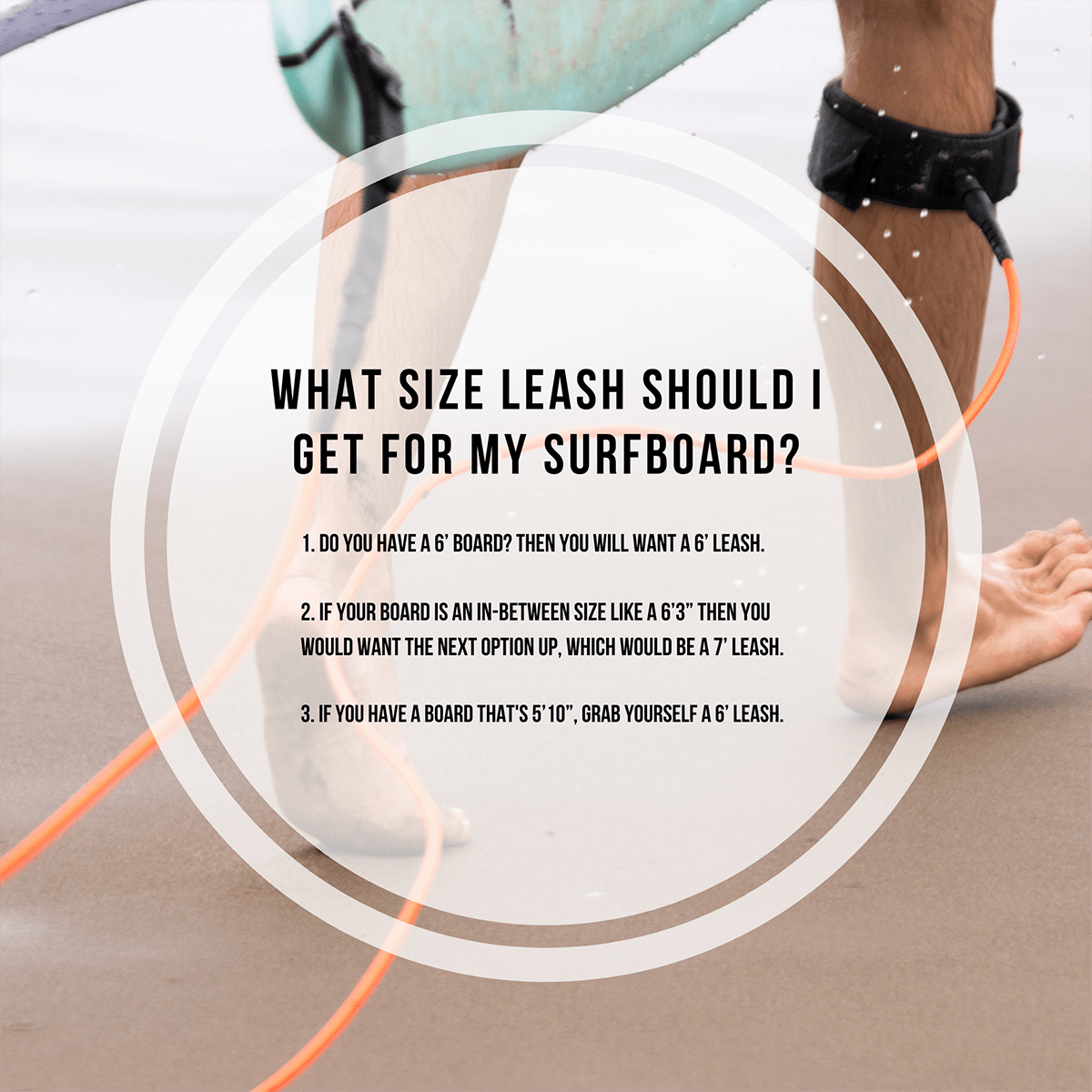
Do you have a 6’ board? Then you will want to get a 6’ leash. If your board is an in-between size like a 6’3” then you would want the next option up, which would be a 7’ leash. If you have a board that’s 5’10”, grab yourself a 6’ leash, and so on. Finding what length leash for your surfboard is pretty easy but there is more to consider.
Leash Size
So you’ve determined the length of your leash now let’s find what size leash for surfboard is the right fit for you. By the size of the leash, we mean the thickness and strength of the leash’s cording. What size board you ride and how large the waves are will determine what size leash you need.
Competition & Pro Leashes
When shopping for what size leash works for your surfboard you will notice several companies have competition and pro leash models. These are made thinner so they don’t tangle as easily and stay out of the way when every moment counts for a professional surfer. That means they are not as strong as a regular leash but with a thickness of around 6mm they are still very strong. If you are riding a shorter board, 6’5” and below on waves that are waist-high to a foot or 2 overhead, a pro or competition leash should be fine.
‘All Around’ or ‘Regular’ Leashes
This is the category that most of us will fit in when we’re trying to figure out what size lease should I get for my surfboard? These are made for more of the beginner to an intermediate-level person who surfs at common breaks and isn’t worried about putting up a top score with the judges. All around or regular leashes are around 7mm thick which means they work fine for both a longboard or a shortboard. The added thickness provides extra strength and durability which means it would take a lot of force for you to snap it.
Longboard Leashes
You’ll also see ‘longboard leashes’ when you are asking yourself what size leash should I get for my surfboard? Like regular leashes, longboard leashes have a thickness of around 7mm. The only difference is you attach the leash to your calf instead of your ankle like normal. The reason for this is so there is less of a chance a surfer will trip on the leash when walking up and down the board. It makes moving around the board a little easier than having the leash on your ankle. However, there is not really a big strength advantage in a longboard leash.
Big Wave Leashes
There are also leashes made specifically for surfers who are catching waves 20 feet or above. These leashes usually feature a thickness of 8mm or more so they can withstand the force of a huge wall of water pulling on it. They also have special safety features like a quick-release feature in case a surfer gets into a life and death situation and needs to ditch their board to get to safety. For most of us, a big wave leash is not necessary and totally overkill.
Leash Safety
Now that you know the names and sizes of all the leashes you should easily be able to answer the question of what size lease should I get for my surfboard? When you buy them you will notice how durable they feel, but the fact is, they do wear out and get weaker and they will break on you if you use them enough.
I have seen people break their leashes on small wipeouts on 3-foot waves. It is always best paddling out knowing that having your leash snap is a real possibility that can leave you swimming toward shore in a panic to retrieve your board. Let’s try to avoid that.
Doing a leash check is essential every time you go out and if you feel like the quality or strength has been compromised replace your leash before you go. The last thing you want is your leash to break sending your board into someone causing an injury, or someone else’s board causing a ding.
Keep it safe and keep it fun!
FAQs About What Size Leash to Get for Your Surfboard
Still wondering what size leash you should get for your surfboard before heading out? Here are some quick answers to the most common questions surfers have.
1. How big should my surfboard leash be?
Your surfboard leash should be about the same length as your board, or slightly longer. This helps keep your board close without increasing the risk of it snapping back toward you after a wipeout.
2. How do I choose the right leash length?
Start with your board length. If your board is an in-between size, round up to the next leash size. For example, if you ride a 6’3” board, go with a 7’ leash to ensure proper coverage and safety.
3. Is a 4 ft leash too short?
In most cases, yes. A 4 ft leash is typically only suitable for very small boards, like kids’ boards or specialty setups. Using a leash that’s too short can increase tension and make it more likely to snap under pressure.
4. What thickness leash should I get?
Leash thickness depends on your skill level and wave conditions. Thinner leashes (around 6mm) are great for smaller waves and performance surfing, while thicker leashes (7mm–8mm+) offer more strength and durability for bigger waves or everyday use.
5. Are thicker surf leashes better?
Not always—they’re stronger, but also create more drag in the water. For most surfers, a standard “all-around” leash offers the best balance between strength and performance. Thicker leashes are better suited for bigger, more powerful waves.
6. Do beginners need a specific type of surfboard leash?
Yes, beginners are usually better off with a standard or “all-around” leash. These are slightly thicker and more durable, making them more forgiving and reliable while you’re still learning and taking frequent wipeouts.
7. Can I use the same leash for different boards?
You can, but it’s not always ideal. Since leash length should match your board size, using one leash for multiple boards may not give you the best performance or safety. It’s usually better to match each board with its own properly sized leash.