


How To Remove Wax From a Surfboard (The Right Way)
Will Moore September 16th, 2016 Posted In: How-To Tags: Repair, Surfing
Removing wax from a surfboard is something we all need to do occasionally, but often neglect doing. Maybe you’re looking at your board wondering how all that once-pristine wax turned into a brown, sandy layer that isn’t providing nearly as much grip as it used to. The good news? Learning how to remove wax from a surfboard is pretty simple. You need three things in roughly this order: a little heat to soften the wax, a wax comb to scrape it away, and a wax remover or solvent to tackle the leftover residue.
What You Need to Start Removing Wax
Regular dewaxing isn’t just about making your board look brand new again. Old wax can collect sand and debris, lose its grip, add unnecessary weight, and even hide pressure dings or other damage you’d rather catch early. The whole process usually takes around 15 to 20 minutes once you get the hang of it, although the best method can vary slightly depending on whether you have a traditional PU board or an epoxy construction.
To get started, there are a few materials you will need in order to properly know how to remove wax from your surfboard:
- A good wax comb (preferably one with a curved side to gather leftover wax on rails)
- Two rags
- A little bit of sunshine…
- Maybe a blow-dryer if the weather does not permit sunshine
When Should You Remove Wax From Your Surfboard?
So, how do you know when it’s actually time to strip everything off? There are a few telltale signs. If your wax has turned dark, sandy, or noticeably less tacky, you’re probably overdue for a fresh coat. You may also want to completely remove the old wax when switching between wax temperatures, such as moving from warm summer water into cooler fall conditions.
Traveling with your board is another good excuse for a full dewax. A clean deck means less chance of old wax melting into your board bag, and it’s much easier to apply fresh wax for the water temperature at your destination. And if you’re getting a ding repaired, always remove the wax around the repair area so the surface is clean and accessible.
For regular surfers, doing a complete dewax and rewax several times throughout the year is pretty normal. Surfers in tropical climates may need to do it more frequently because heat can soften and break down wax faster. Also, in case you’re wondering what does surfboard wax even do, we’ve got you covered!
First Things First: Preparation
There are a few things you can do to best remove wax from your surfboard! I usually allow my board to sit in the hot sun for five to ten minutes. Allow time for the sun to begin to soften the wax. If the temperature doesn’t allow for this, this is where the blow-dryer comes in, you can try blowing hot air steadily over the board, or even pouring hot water over your board to help soften the wax.
After the wax has softened, take your wax comb and scrape the wax off in long strips from nose to tail. It should come off fairly easily, like butter, but if not, let it soften for another few minutes rather than trying to force it. Use the curved edge of the wax comb, if applicable, to remove any wax left on the rails.
One important note: Don’t let the wax completely melt into a liquid. You want it soft and pliable enough to scrape, not running all over the deck. If you’re working with an epoxy board, be especially conservative with direct heat. Excessive heat can contribute to damage or delamination, so use shorter exposure and check the surface frequently. When in doubt, use less heat and more scraping.
PU vs. Epoxy Surfboards: Does It Matter?
Both PU and epoxy surfboards can be dewaxed using the same basic process: soften, scrape, remove the residue, and inspect the board. The biggest difference is how carefully you need to manage heat and solvents.
Epoxy boards can be more sensitive to excessive heat, particularly when they use EPS foam construction. Avoid putting an epoxy board in intense direct sunlight for an extended period or using a heat gun close to the surface. A blow dryer on a low setting, used in short, sweeping passes, is a safer option when sunlight isn’t available.
Not sure what type of board you have? Err on the side of less heat and a little more elbow grease. It’s much easier to soften a little more wax than it is to repair a board damaged by excessive heat.
How to Remove Wax From a Surfboard: Step-by-Step
1. Soften the Wax
Lay your board deck-up in direct sunlight for several minutes, checking it frequently as the wax softens. Five to ten minutes is usually plenty to get things moving on a warm day. If the weather doesn’t cooperate, a blow dryer on a low setting works well too. Keep the dryer moving in sweeping passes rather than holding it in one spot.
The goal is soft, pliable wax—not a completely melted puddle. Once the wax looks a little shiny and feels soft to the touch, you’re ready to scrape.
A quick note for epoxy boards: Be more conservative with heat, particularly if the board uses EPS foam construction. Avoid heat guns and prolonged exposure to intense direct sunlight. A blow dryer on a low setting or shorter periods of sunlight are safer options. When in doubt, use less heat and a little more elbow grease.
2. Scrape Off the Main Wax
Now for the satisfying part! Take your wax comb and use the flat edge to scrape the softened wax into long strips, working from nose to tail. It should come off fairly easily, almost like butter. If it’s still stubborn, give it a little more time to soften rather than scraping harder.
Use the curved edge of your wax comb around the rails and other areas where wax likes to hide.
Don’t have a wax comb handy? An old plastic credit card can work in a pinch. Just be gentle, and remember that a proper wax comb is sturdier and much better suited to the job. We’d also recommend sacrificing an old card rather than your driver’s license!
3. Collect and Dispose of the Old Wax
As you’re scraping, collect the wax chunks instead of letting them blow into the sand or wash toward the water. Surf wax isn’t something you want scattered around the beach.
Once you’ve got most of the old wax off, you can move on to the remaining sticky residue. Some surf wax manufacturers also offer recycling or take-back options, so it’s worth checking whether your particular wax can be recycled.
4. Remove the Remaining Wax Residue
This is where our old friend Mr. Miyagi comes in: wax on, wax off! Take a clean, soft rag and work over the remaining waxy residue in circular motions until the deck starts looking clean and clear.
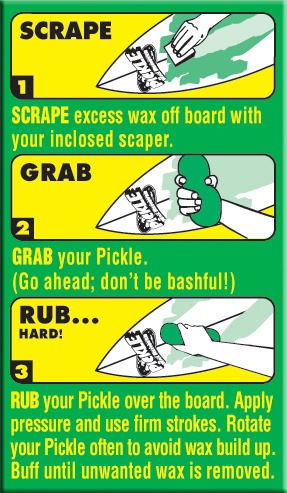
A dedicated surfboard wax remover, such as Pickle Wax Remover, can make this step much easier. Pickle is a chemical-free, dry wax remover made with a sawdust-like material that helps grab onto the stubborn residue left behind after scraping. And yes, it really does look like a pickle! It’s an easy option when you’re wondering how to get wax off a surfboard without relying on harsh chemicals.
For another option, a small amount of coconut oil can help soften stubborn residue. Let it sit briefly before wiping the area clean. If you choose to use isopropyl alcohol, test it on a small, inconspicuous area first and follow the board manufacturer’s recommendations for your specific construction.
5. Wipe the Board Completely Clean
Take your second clean, dry rag and give the deck a final wipe and buff. Hold the board at an angle under good light. You’ll often spot leftover wax film that isn’t obvious when you’re looking straight down at it.
And don’t worry if you need to make a second pass. Boards with years of old wax buildup may need a little extra attention before they’re completely clean.
Once you’re finished, the board should look almost brand new again – minus all those pressure dings from the sessions we all live for!
6. Inspect Your Surfboard Before Rewaxing
Now you’ve got a perfectly clean deck, so take advantage of it! Look closely for pressure dings, cracks, soft spots, or signs of damage that were hidden beneath the old wax. This is the perfect time to address small problems before they become bigger ones.
Check out our guides on Surfboard Pressure Ding & Dent Repair and How to Fix a Broken Surfboard for more help with surfboard repairs.
Rewaxing Your Surfboard: What to Do Next
I prefer to use either Sticky Bumps or Mrs. Palmers on my boards, due to the fact that I find that the grip tends to last longer. Be sure to buy surf wax that coordinates with the temperature of the water you will be in. I would also suggest using a basecoat of wax if you are going to surf in waters in a hot climate, it really takes a lot to melt this type of wax.
Types of wax range from: Cold: 60 degrees and below, Cool: 58-68 degrees, Warm: 64-74 degrees, Tropical: 75 degrees and above. Choosing the right wax for the water temperature is important because wax that’s too soft or too hard for the conditions won’t give you the traction you need.
Personally, I completely rewax my board 3-4 times per Summer on the East Coast, but I apply a little more each time I plan to set out for the waves. On the other hand, living in Hawaii or a more tropical climate, you’re going to find yourself needing to do so a lot more frequently. Again, proper removal of surf wax is crucial to keep unwanted added weight off of your board, and to keep it protected and looking as slick as possible. If dirty wax is clinging to your board and it’s beginning to look dingy, you might want to set aside some time to follow these steps.
How often you need to completely strip and replace your wax depends on how often you surf, the water temperature, and how quickly your wax collects sand and debris. For a deeper look at when to start fresh, check out our post on How Often Do You Wax a Surfboard.
And once your board is clean, it’s ready for a fresh coat!
What If the Wax Won’t Come Off?
Sometimes old surfboard wax doesn’t want to go quietly. If your wax has hardened in cold weather, don’t attack it with more force—give it more heat instead. Softening the wax makes scraping much easier and reduces the chance of accidentally scratching the board.
If an old layer of basecoat is still stuck to the fiberglass, give your wax remover a little more time to work before wiping. And if you’re fighting wax buildup around the rails, use the curved edge of your wax comb and take your time. Tight corners are usually where stubborn residue likes to hide.
Don’t worry if your board needs a second pass. A particularly old or heavily waxed deck may take a little extra work to get completely clean. That’s normal!
Keep Your Surfboard Clean, Grippy & Ready to Ride
Knowing how to remove surfboard wax is one of those simple surf-maintenance skills that pays off every time you hit the water. A clean deck makes it easier to apply the right wax for the conditions, helps you spot damage early, and keeps years of accumulated sand and grime from turning your board into a sticky, sandy mess.
The next time you find yourself wondering how to get wax off a surfboard, remember the formula: soften it, scrape it, clean the residue, and give your board a quick inspection before starting fresh. It may take a little elbow grease, but there’s something pretty satisfying about seeing that clean fiberglass underneath all that old wax.
Now go get that board looking fresh, and then go put the fresh wax to work!
Frequently Asked Questions: Surfboard Wax Removal
How do you remove wax from a surfboard without a wax comb?
You can use a plastic scraper or an old credit card in a pinch. Gently soften the wax with sunlight or low heat first, then scrape it into strips. A proper wax comb is still the better option because it is designed for surfboard decks and has a curved edge for cleaning around the rails.
Can you use coconut oil to remove surfboard wax?
Yes. Coconut oil can help soften and lift stubborn wax residue after the main layer has been scraped away. Apply a small amount, allow it to sit briefly, then wipe the surface thoroughly with a clean rag. Make sure no oily residue remains before applying new wax.
How often should you remove and replace surfboard wax?
It depends on how frequently you surf and the conditions. Many regular surfers completely dewax their boards several times a season, while surfers in hot, tropical climates may need to do it more often. You should also strip and replace wax when switching between significantly different water-temperature waxes, traveling, or preparing for a repair.
Does removing wax damage a surfboard?
Proper wax removal should not damage a surfboard. The key is to use a wax comb carefully, avoid aggressive scraping, and use only board-compatible cleaners or solvents. Excessive heat should also be avoided, particularly on epoxy/EPS boards.
Can you remove wax from an epoxy surfboard the same way?
Yes, the basic process is the same, but epoxy/EPS boards deserve extra care with heat and cleaning products. Use lower heat, work gradually, and follow the board manufacturer’s recommendations for solvents. When you’re unsure, choose a dedicated surfboard-safe wax remover and avoid excessive heat.

I have only been surfing about 2 years. I started while living in San Diego. However, I am a Maryland native. I am looking to meet people that know the areas and get input on the best times to get out and continue learning.