


The Wing Foiling Wetsuit Guide: Balancing Wind-Chill and High-Exertion Performance
Quadri Abdur March 4th, 2026 Posted In: Articles
Wing foiling is one of the few water sports where your body is both burning energy and battling wind chill at the same time. You are lifted above the water on a foil, exposed to strong wind, yet constantly pumping your arms and core to control the wing. This creates a unique challenge that traditional surf wetsuits are not designed for.
In this detailed wing foil wetsuit guide, we will examine why wing surfers need different gear, how to balance warmth with flexibility, and what features matter most for comfort and safety on the water!
Wing Foil Wetsuit Guide: Top Key Takeaways
- Accessories like impact vests, thin booties, and wind-blocking beanies improve comfort and safety.
- Wing foiling creates high wind chill but also high body heat, so wetsuits must balance warmth and breathability.
- Smoothskin neoprene on the chest and back helps block wind and reduce evaporative cooling.
- Double-lined neoprene on arms and legs improves flexibility and durability.
- Arm flexibility is essential to prevent arm pump during long sessions.
- Reinforced shins, knees, and seat areas help protect against foil impacts and harness wear.
- Wingers often choose slightly thinner suits than surfers in the same water temperature.
- Front-zip suits help release excess heat during intense sessions.
The Wing Foiling Contradiction
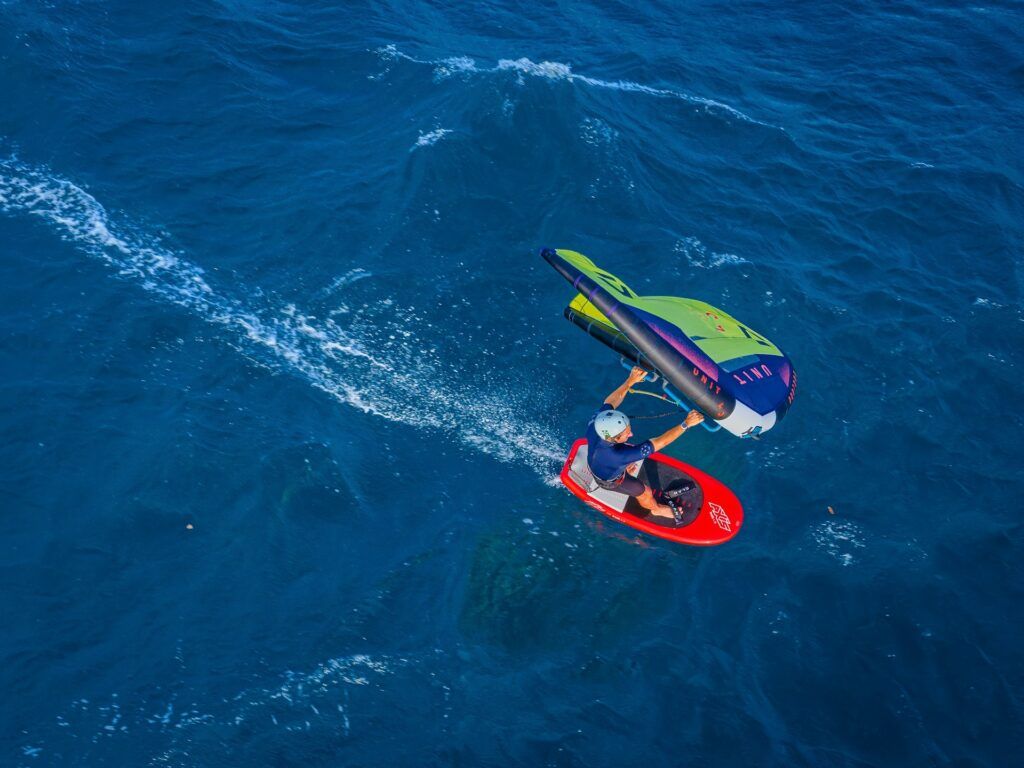
Wing foiling sits at the crossroads of two very different demands. On one hand, you are lifted above the water, which means you stay drier than surfers and feel the full force of the wind. On the other hand, you are constantly using your arms, shoulders, and core to control the wing. This creates heat and sweat, even in cold conditions. This is why wetsuit requirements for wing surfing differ from those for surfing or windsurfing. What’s more, surfers spend more time submerged, so their suits focus on insulation.
Windsurfers deal with wind, but not as much arm movement. Wing foilers need a wetsuit that blocks wind without trapping too much heat, and that allows full arm mobility without fatigue. The goal is simple: stay warm, stay flexible, and avoid overheating.
Why Do Foilers Need Different Wetsuits Than Surfers?
At first glance, wing foiling and surfing seem similar. Both involve boards, neoprene, and time in the ocean. But the physical demands and environmental exposure are completely different — and that’s why foilers need different wetsuits than surfers.
The biggest difference is water immersion time. Surfers spend a large percentage of their session paddling, duck diving, sitting in the lineup, and wiping out. They are repeatedly submerged, which means their wetsuits are primarily designed for thermal insulation in water.
Wing foilers, however, spend much of their session elevated above the surface on foil. They are exposed to continuous wind and apparent wind created by their own forward speed. That creates intense wind chill and evaporative cooling, something surfers experience far less.
Here are the key differences that impact wetsuit design:
1. Wind Exposure vs. Water Immersion
Surfers lose heat mostly through water contact. Foilers lose heat through wind hitting a wet wetsuit surface. This is why wing-specific suits often use Smoothskin neoprene panels on the chest and back — to block wind and reduce evaporative cooling.
2. Arm Exertion Levels
Surfers paddle, but then rest while sitting or waiting for waves. Foilers continuously hold, sheet, and pump the wing for the entire session.
This sustained upper-body engagement means foilers need:
- Thinner, high-stretch neoprene in the arms
- Greater shoulder mobility
- Reduced seam restriction
A surf wetsuit with thick, heavily insulated arms can quickly lead to forearm fatigue and arm pump in wing sessions.
3. Overheating Risk
Surfers rarely overheat in cold water because they are constantly submerged. Foilers generate heat through constant movement and stay more elevated and dry.
That’s why many wingers choose slightly thinner wetsuits than surfers in the same water temperature. Breathability and ventilation matter more.
4. Impact & Abrasion Zones
Surfers typically contact soft water and waxed deck pads. Foilers deal with:
- Carbon foil masts
- Sharp board rails
- Harness hook friction
- High-speed falls
This requires reinforced shins, knees, and seat panels — features not always emphasized in traditional surf wetsuits.
In short, surf wetsuits are designed primarily for insulation during immersion. Wing foiling wetsuits must balance wind protection, flexibility, heat regulation, and impact durability — all at the same time.
That difference is subtle from the outside, but critical once you’re on foil.
The Wind-Skin vs. Double-Lined Debate
One of the biggest questions in any wing foil wetsuit guide is whether to choose Smoothskin or double-lined neoprene. The answer is usually a mix of both.
Smoothskin for the Chest and Back
What is smoothskin? Quick answer: Smoothskin, also called single-lined neoprene, has a shiny or even sometimes a matte exterior that repels water and blocks wind. This is important because wing foilers are exposed to evaporative cooling. When water on your suit evaporates, it pulls heat from your body.
Smoothskin reduces this effect and keeps your core warm. However, surfers do not need this as much because they spend more time underwater, where wind chill is less of a factor.
Double-Lined for Arms and Legs
Double-lined neoprene has fabric on both sides. It is more durable, more flexible, and better at resisting abrasions from the board. Wing foilers kneel, climb onto the board, and sometimes brush against the foil mast, so durability matters. Double-lined neoprene also stretches more easily, which is important for arm movement. This is one of the key reasons why foilers need different wetsuits than surfers.
Arm Flexibility and the Arm Pump Factor
Arm pump is a real problem for wing foilers. Holding and pumping the wing for long periods can cause forearm fatigue, especially if the wetsuit sleeves are too thick or stiff. To avoid this, look for:
- High-stretch neoprene in the shoulders and underarms.
- Thinner neoprene in the arms, such as 2mm sleeves.
- Suits designed with wing foiling in mind.
Some riders prefer a Long John wetsuit paired with a neoprene jacket. This gives full leg warmth and core protection while keeping the arms completely free. It is a popular setup for warm-to-mild conditions.
Durability in High-Stress Zones
Wing foiling puts unusual stress on certain parts of the wetsuit.
- Shins and Knees: When climbing onto the board or recovering from a fall, your shins and knees often make contact with the foil mast or deck. Reinforced knee pads that extend down the shin help prevent tears and bruising.
- Seat Area: If you use a harness, the seat area of your wetsuit can wear out quickly. Look for abrasion-resistant neoprene or reinforced panels to prevent pilling and thinning.
These durability features are not always necessary for surfing wetsuits, which is another reason wing surfing wetsuit requirements are different.
Temperature Guide for the Flight
Wing foilers often need a slightly thinner wetsuit than surfers in the same water temperature. Because you stay more elevated and drier, your body does not lose as much heat through water immersion. But you do lose heat through wind chill, which is why smoothskin panels are so important. As a general guideline, you can use:
- Warm water: 2mm or 3/2mm with Smoothskin chest.
- Mild water: 4/3mm with Smoothskin chest and back.
- Cold water: 5/4mm with Smoothskin and high-flex arms.
Ventilation also matters. Front-zip suits allow you to open the chest slightly to release heat during intense sessions. Some riders even “burp” the suit by letting warm air escape through the neck.
Essential Accessories for Wingers
Here are some essential accessories that can make a big difference in comfort and safety.
- Impact Vests: Foiling involves speed and height, so impact vests are common. Choose a wetsuit that fits comfortably under or over the vest without bunching.
- Footwear: Thin neoprene booties, usually 2mm or 3mm, help protect your toes from the foil while still allowing you to feel the board. Thick booties reduce sensitivity and make balance harder.
- Headwear: A wind-blocking neoprene beanie helps keep your head warm during high-speed runs. Even in mild weather, wind chill on the ears can be uncomfortable.
Your Flight-Ready Checklist
Before heading out, make sure your wetsuit setup includes:
- Smoothskin chest and back for wind protection.
- High-flex arms to prevent arm pump.
- Reinforced shins and knees for foil safety.
- Abrasion-resistant seat area when using a harness.
- Front-zip or neck-entry for heat control.
- Thin booties, impact vest, and wind-blocking beanie.
Wing foiling is all about balance. The right wetsuit helps you stay warm without overheating, flexible without fatigue, and protected without feeling restricted. With the right setup, every session feels smoother, safer, and more enjoyable.