


River Surfing 101: How Freshwater Changes Your Buoyancy and Wetsuit Needs
Lauren January 2nd, 2026 Posted In: Articles Tags: Surfing
River surfing has officially moved from niche curiosity to full-blown surf discipline. From Munich’s legendary Eisbach wave to Bend, Oregon’s standing waves and engineered river features popping up worldwide, surfing stationary waves in freshwater has become the ultimate endless ride!
But here’s the catch: if you show up with your standard ocean surf setup, you’ll probably struggle. Many first-time river surfers might be thinking “Why do I feel like I’m sinking?” or “Why am I freezing already?”
The answer comes down to physics, temperature, and gear. Freshwater buoyancy surfing is fundamentally different from ocean surfing, and your wetsuit plays a bigger role than you might think. Below, we’re breaking down what river surfing is, why freshwater changes how you float, and exactly how to choose the right river surfing wetsuit so you can stay warm, stable, and confident on the wave!
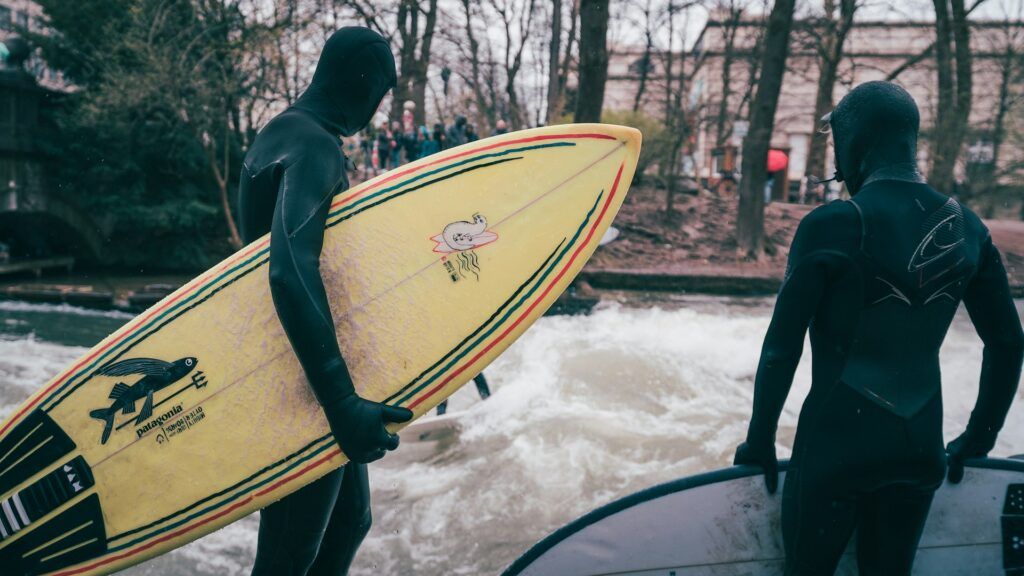
What Is River Surfing & Why It Feels So Different
Before we talk neoprene, let’s quickly clarify what is river surfing. Unlike ocean surfing, river surfing involves riding stationary waves created by flowing water hitting an obstacle. Whether they’re natural or man-made. The wave doesn’t move, but the water does, meaning you’re constantly balancing against a powerful current.
This creates two immediate challenges for ocean surfers transitioning to rivers:
- You sit lower in the water
- You get cold faster
Both are directly tied to freshwater physics.
The Science: Saltwater vs. Freshwater Density
Here’s the simple science behind the struggle:
- Saltwater density: ~1025 kg/m³
- Freshwater density: ~1000 kg/m³
That difference might sound small, but in surfing terms, it’s huge.
The “Sink” Factor
Saltwater helps hold you up. Freshwater doesn’t. When you paddle out on a river wave, you’ll notice:
- Your board sits lower
- Paddling feels heavier
- Pop-ups feel slower and more demanding
This is the defining challenge of freshwater buoyancy surfing. You can’t change the water, but you can change how much buoyancy your gear provides.
Why You Need a Thicker Wetsuit for Rivers
This is where wetsuits become more than just insulation – they become flotation tools.
Buoyancy Boost from Neoprene
Neoprene is filled with nitrogen gas bubbles, which naturally float. A thicker river surfing wetsuit provides:
- More buoyancy to counter freshwater density
- Better body positioning on stationary waves
- Less fatigue during longer sessions
Think of it as a subtle, performance-friendly flotation assist.
Temperature Is the Other Enemy
Most surfable rivers are fed by snowmelt or dam release systems. Even in summer, water temps often sit between 40°F and 55°F. That’s cold! Especially when you’re stationary and constantly submerged.
River Surfing Wetsuit Thickness Rule of Thumb
Add 1mm to what you’d normally wear in the ocean for the same air temperature.
- Ocean 3/2mm → River 4/3mm
- Ocean 4/3mm → River 5/4mm
This combo of warmth and float is what makes a proper wetsuit for cold river water essential, not optional. Discover our collection of cold water wetsuits today to help!
Durability Matters: Concrete, Rocks, and Rebar
Ocean surfers worry about reefs and sandbars. River surfers worry about… everything else.
River waves often form near:
- Concrete channels
- Boulder-strewn riverbeds
- Metal ladders and rebar
Best Neoprene Choice for Rivers
Skip delicate materials and prioritize toughness.
- Double-lined neoprene (nylon on both sides)
- More abrasion-resistant
- Better for climbing in and out
- Longer lifespan in harsh environments
Avoid smoothskin or slick rubber exteriors as they tear easily on rocks and concrete.
Seam Construction
Look for:
- Glued and blind-stitched seams
- Liquid-taped seams in high-wear areas
These features dramatically improve durability for river use.
River Surfing Gear Guide: Essential Accessories
River surfing demands a slightly different setup than ocean sessions. Here’s what should always be part of your kit:
Must-Have River Surfing Gear
- Hard-sole booties (3mm+) – for grip and foot protection
- Waist leash – safer in moving water than ankle leashes
- Helmet – highly recommended for shallow waves
- Impact vest or PFD – common and often required at river parks
In rivers, booties aren’t just about warmth, they’re about safety. Walking barefoot on slick rocks or submerged concrete is a recipe for injury. And we don’t need any boo-boos here.
Adjusting Your Board Volume (Quick Tip)
While wetsuits are our specialty, it’s worth touching on boards to round out your setup knowledge.
Because freshwater is less dense, most surfers need slightly more volume to achieve the same float they’re used to in the ocean. Even a few extra liters can make:
- Paddle-ins easier
- Takeoffs more stable
- Sessions less exhausting
Paired with a thicker wetsuit, this adjustment makes river surfing dramatically more enjoyable.
Summary Checklist: Your River Surfing Setup
Here’s a quick-reference guide before you paddle out:
- Wetsuit: 4/3mm or 5/4mm (prioritize warmth + float)
- Material: Double-lined neoprene
- Booties: 3mm+ with durable soles
- Safety Gear: Helmet, impact vest, waist leash
- Bonus: Slightly higher-volume board than your ocean setup
Don’t Let Freshwater Sink Your Session
River surfing is one of the most rewarding ways to ride a wave. But it demands respect for the environment and the physics at play. Freshwater changes how you float, how you stay warm, and how hard your gear works.
The right river surfing wetsuit thickness, durable construction, and safety-focused accessories can turn a frustrating first attempt into a lifelong obsession. Now gear up and enjoy the waves of the river!