


Scuba Diving Activities & The Gear You Need for Each
Candace Reno April 27th, 2023 Posted In: Articles Tags: SCUBA
SCUBA diving is full of exciting opportunities. Your first certification course teaches you all about diving safely. The advanced open water course then gives you teasers of what other types of diving might be like. Once you are comfortable in the water, having something to do on a dive can keep your enthusiasm for diving alive. What SCUBA diving activities should you try, and what speciality SCUBA diving gear do you need for each? Let’s take a look at some popular SCUBA diving activities and also provide you with a SCUBA diving equipment checklist!
Reef Diving
Reef diving is perhaps one of the most popular SCUBA diving activities. It is easy for beginner divers and just as enjoyable for experienced divers. They can be shallow, deep, full of coral, swim-throughs, or even patchy, scattered throughout the sand. Some reefs are full of life while others are dying. This is a big problem throughout the world. When you dive on a reef, do your part and stay off of it! There are opportunities for divers to help with coral conservation efforts. Some dive shops will let you participate in planting coral in the coral farms. What a great way to give back to the ocean!
Reef Diving Equipment
- Exposure Protection: A well-fitting SCUBA diving wetsuit or rash guard protects you from accidental stings (like jellyfish) or fire coral if you are pushed by a surge.
- Reef Hook: Used primarily in high-current areas, a reef hook allows you to anchor yourself to a piece of dead rock so you can watch the action without exhausting yourself or kicking the reef.
- Mesh Trash Bag: Environmentally conscious divers carry these to collect “ghost gear,” plastic, or fishing lines found tangled in the coral.
Wreck Diving
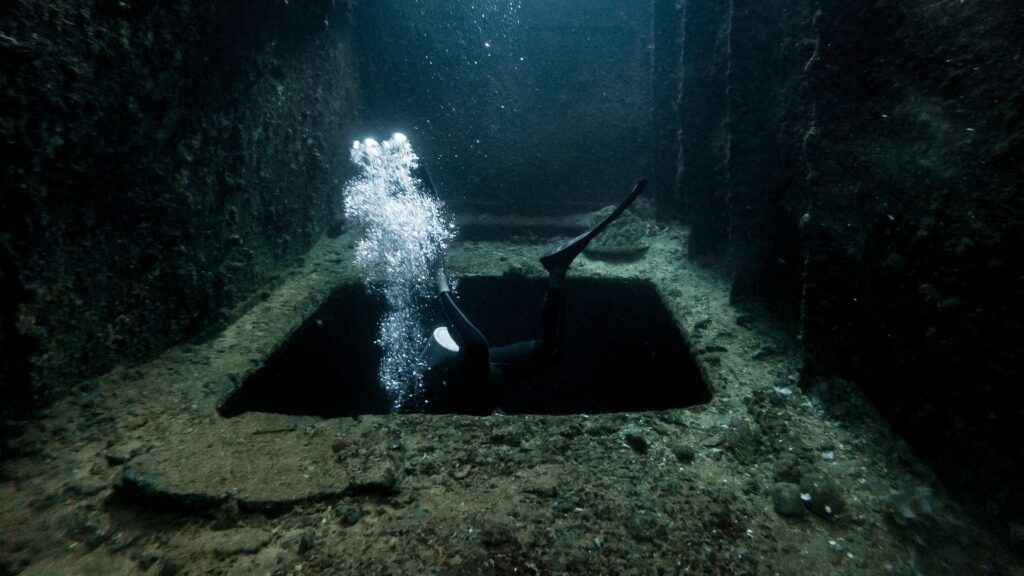
Wreck diving is one of my favorite SCUBA diving activities! When people think of wrecks, they think of boats, but they could be planes or other interesting objects. A really cool thing about wreck diving is learning about the history of the wreck. Many wrecks were sunk for the purpose of making an artificial reef. There are many that were also sunken naturally.
Wrecks can be dived just on the outside and can be very pleasing in this manner. However, if you obtain the recreational wreck diving certification, you can learn all about how to safely enter a wreck and explore inside. Proper exposure protection will help protect against potential scrapes while penetrating a wreck. Remember, take only pictures! If you see items on a wreck from what it was hauling, you should not take it because it might be illegal to do so but also because it makes the wreck less interesting for future divers.
Wreck Diving Equipment
- Thermal Protection: This is where wetsuit thickness for different diving activities comes into play. Thick or cold water wetsuits or drysuits are essential as wrecks are often in deeper, colder water. They also provide a barrier against sharp, rusted metal or barnacles.
- Wreck Reel & Line: If you plan to penetrate the wreck, a reel is your lifeline to the exit point, ensuring you can find your way out if silt is kicked up and visibility drops.
- Primary & Backup Lights: Wrecks are dark inside and full of shadows outside. A strong primary light brings out the colors of the growth on the hull, and a backup is vital for safety inside overhead environments.
- Dive Knife/Cutting Tool: Wrecks often snag fishing nets and lines. A sharp cutting tool is a safety must-have to prevent entanglement.
Search and Recovery
Search and recovery diving is a great way to keep up with advanced skills such as search patterns and staying focused looking for an item all while keeping a close eye on your air consumption. This type of diving can also be quite rewarding. This isn’t public safety diving where crimes are involved. This is recreational diving in search of lost items. People often lose items off of boats or docks, such as keys, rings, and phones. Sometimes people pay handsome rewards for their lost treasures.
Search and Recovery Diving Equipment
- Compass: This is the most important tool for executing precise search patterns (like the “expanding square” or “u-pattern”) to ensure you cover the entire area.
- Lift Bag: For heavier items like boat motors or weighted bags, a lift bag allows you to use air to safely bring the object to the surface without over-exerting yourself.
- Underwater Slate: Used to map out the search area or communicate specific coordinates and findings with your buddy.
Dive Caching
Speaking of lost treasures, one of the newest, hottest SCUBA diving activities is dive caching. Much like geocaching but underwater, someone will hide items and post the coordinates on a website. At the dive site, underwater navigation and search and recovery skills are honed by looking for these items. Often there is a dive slate or some way for you to leave your name or notes once you have located the item.
Dive Caching Equipment
- Underwater GPS/Navigational Tools: While traditional GPS doesn’t work underwater, many divers use a combination of a surface GPS to find the spot and a high-quality Compass to navigate from the anchor line to the cache.
- Flashlight: Caches are often hidden in small crevices or under ledges where it is dark; a small torch helps you spot the container.
- Dive Slate & Pencil: Essential for “signing” the logbook inside the cache to prove you found it.
Underwater Photography
Underwater photography is always challenging but less so these days with the advancement of technology. There are newer cameras that are waterproof themselves, no housing required, and have a built-in diving mode that puts a red filter in place when diving in blue water. I think the simple point-and-click options for people just starting out with this hobby are best.
Underwater Photography Equipment
- Camera & Housing: Whether it’s a GoPro or a high-end DSLR in a specialized housing, this is your primary tool for capturing the deep.
- Strobes or Video Lights: Because water absorbs red light first, external lights are necessary to bring back the vibrant reds, oranges, and yellows of the marine life.
- Camera Tray & Arms: These handles allow you to stabilize the camera and position your lights away from the lens to reduce “backscatter” (lighting up the particles in the water).
- Extended Thermal Protection: Because photographers move very slowly and stay relatively still to get the perfect shot, they get cold faster. Wearing a thicker suit or a hooded vest helps you stay in the water longer.
Try Some SCUBA Diving Activities with the Right Gear
No matter what type of SCUBA diving activity you try, remember, your number one objective on every dive is to return safely. You must keep a careful eye on your air consumption and no-decompression limits. Your secondary objective is doing the activity that you choose.
This is not an all-inclusive list. There are many more SCUBA diving activities that divers enjoy. Get with your nearest SCUBA diving shop to inquire about the exciting certification courses they offer in these fun areas of SCUBA diving activities.