


How to Train for a Triathlon
Ronnie Ayres March 11th, 2019 Posted In: How-To Tags: Triathlon
How To Train For A Triathlon: Your Triathlon Training Plan
Training for a triathlon is one of the most rewarding and challenging fitness goals you can take on. The blend of swimming, biking, and running pushes your endurance, mental strength, and time management to new levels. Whether you’re eyeing your first local sprint or dreaming of one day conquering an Ironman, understanding how to train for a triathlon the right way will set you up for success.
In this article, you’ll learn how to train for a triathlon step-by-step. From choosing your race distance and structuring your workouts, to mastering nutrition and race-day strategy. Training plans vary depending on your type of triathlon event:
- Sprint Triathlon: 750m swim / 20K bike / 5K run
- Olympic Triathlon: 1.5K swim / 40K bike / 10K run
- Half-Ironman (70.3): 1.2-mile swim / 56-mile bike / 13.1-mile run
- Full Ironman (140.6): 2.4-mile swim / 112-mile bike / 26.2-mile run
Whether you’re wondering “How do I train for a triathlon if I’m a beginner?” or “How do you train for a triathlon and balance it with work and life?” — this article will break it all down for you!
Planning and Preparation
Before diving into workouts, it’s important to plan your triathlon training strategically. Preparation lays the foundation for every successful race.
Choose Your Race Distance: If this is your first event, start with a Sprint triathlon. These shorter races help you gain confidence before moving up to Olympic or Half-Ironman distances.
Determine Your Timeline: Most triathletes follow a 12–16 week plan for Sprint or Olympic races. If you’re targeting a Half or Full Ironman, aim for 20–30 weeks of structured training.
Get a Physical Check-Up: Because triathlon training is demanding, check in with your doctor to ensure your heart, joints, and lungs are ready for the workload.
Gear Up for Success:
- A properly fitted bike and helmet
- Running shoes designed for your gait and terrain
- Goggles and a wetsuit for open-water swims
Getting these basics right sets you up for efficient, injury-free progress.
Get Started in Triathlon Training
So where should you start in formulating a triathlon training plan? Many triathletes have some sort of background in swimming, biking or running. Maybe you love running and want to diversify your fitness with some time in the saddle and in the water. Or, you swam in high school or college and are curious about how that could benefit you in triathlon racing. Perhaps you enjoy all three disciplines already and seek some friendly competition with your peers.
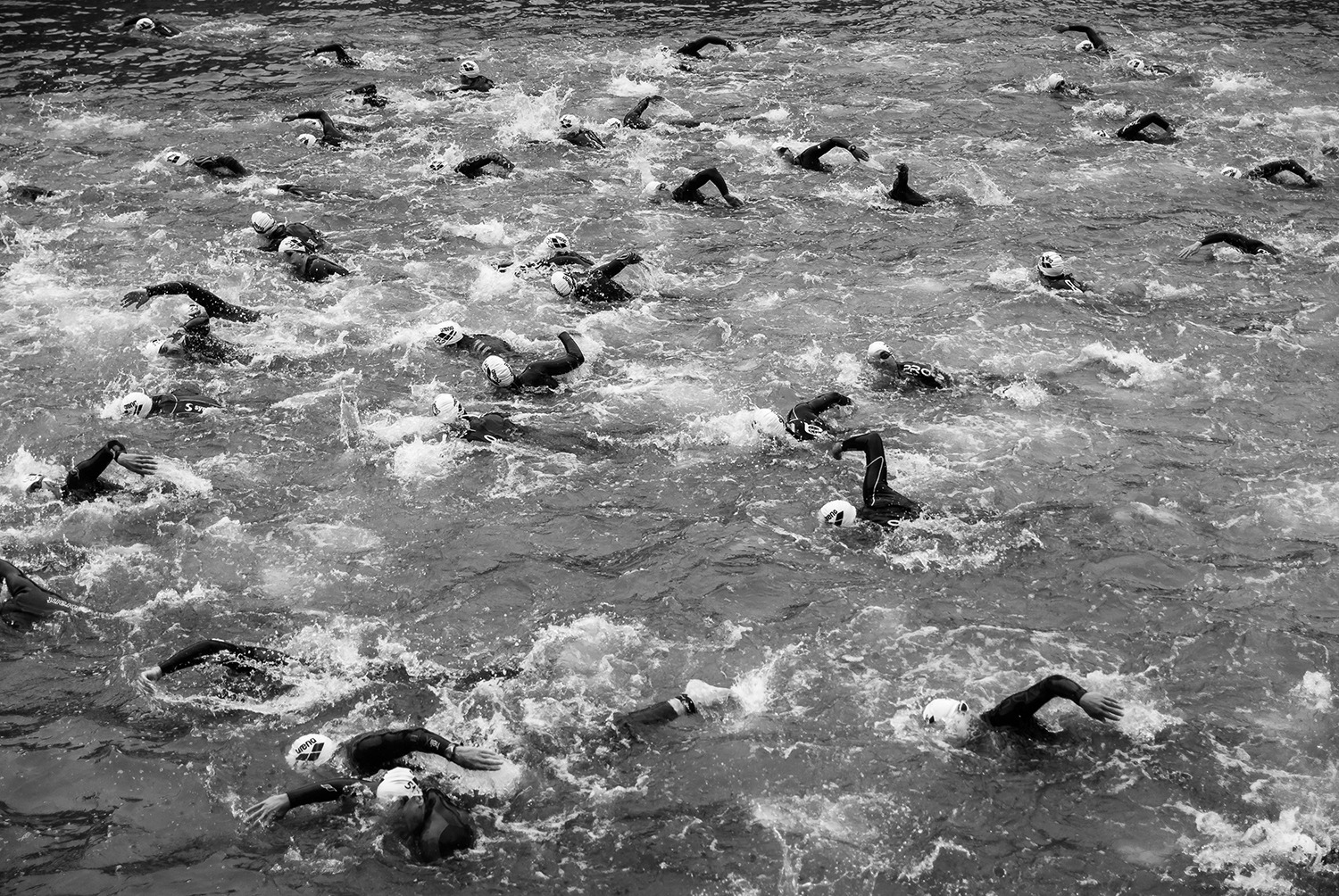
Whatever the motivating factor is, training for triathlons can help attain a well-rounded level of fitness. And everyone develops a “strong leg”, meaning they favor or excel at one of the disciplines over the others. But focusing on improving in all aspects, requires commitment and planning whether you are getting ready for your first local sprint race or you are already inked up with the Ironman logo or Olympic rings.
Once your plan is in place, it’s time to focus on the core principles of how to train for a triathlon effectively.
1. Consistency is Everything: Training regularly — even when life gets busy — builds endurance and confidence.
2. Mix in Brick Workouts: Combine two disciplines back-to-back (like biking followed by running) to train your body for transitions.
3. Build in Phases:
- Base Phase: Build aerobic fitness.
- Build Phase: Increase speed and strength.
- Peak & Taper: Sharpen performance, then rest before race day.
4. Recovery is Training Too: Quality sleep, rest days, and balanced nutrition are what help your body adapt and grow stronger.
Even if you’re following a beginner plan, these principles keep you on track and injury-free. Remember, it’s better to do consistent moderate training than sporadic intense sessions. That’s the secret sauce to sustainable triathlon progress!
The Swim Discipline
Many beginners find swimming the most intimidating part of triathlon training, but it doesn’t have to be. Start by focusing on technique before distance. If you’re asking “how do I train for a triathlon swim?” the answer is to build efficiency first.
- Focus on Technique: Take a few coached sessions or practice drills that refine breathing, body rotation, and stroke mechanics.
- Mix Up Your Workouts: Alternate between endurance swims (steady pace for 20–30 minutes) and intervals (e.g., 8x100m fast, 20 seconds rest).
- Practice Open-Water Skills: Train occasionally in lakes or oceans to get used to sighting, swimming straight, and wearing a wetsuit.
Confidence in the water makes a huge difference on race day. The more comfortable you are in unpredictable conditions, the calmer and faster you’ll be!
The Bike Discipline
The bike is where you’ll spend most of your race time, so learning how to train for a triathlon on the bike is essential.
Get a Proper Bike Fit: This ensures comfort, aerodynamics, and prevents knee or back pain.
Train in Layers:
- Long Rides: Build endurance.
- Intervals: Boost power and speed.
- Hill Repeats: Strengthen legs and stamina.
Safety First: Always wear a helmet, learn basic bike maintenance (like changing a flat), and follow road rules.
Aim for at least two rides per week. One focused on steady endurance, the other on higher-intensity intervals. You’ll build both strength and confidence for race day.
The Run Discipline
Running off the bike feels different than running fresh. Your legs are tired and coordination can be tricky. That’s why it’s key to include brick workouts that combine the two.
Train Smart:
- Follow the 10% rule — never increase your weekly mileage by more than 10%.
- Focus on form and cadence (aim for 170–180 steps per minute).
- Choose running shoes that fit your stride and terrain.
Practicing your pacing off the bike helps you run strong when it counts. Short post-bike runs, even 10–15 minutes long, teach your body how to adapt to that heavy-legged feeling.
Expert Advice on Triathlon Training
Joe Maloy, the top USA triathlon finisher in the 2016 Rio Olympics gave us some insight on training and how to prepare for a triathlon of the Olympic distance, 1-mile swim, 25-mile bike, 6.2-mile run. Maloy emphasizes that a solid fitness base is important for all distances and puts in over 30 hours a week during his heaviest training loads.
“The majority of the training is actually pretty similar for Olympic compared to Half Ironman. The biggest difference is the speed requirement is faster for Olympic so the training needs to focus more on that speed. While the swim distance is relatively the same, the bike and run are both over twice as long in the Half Iron. The shorter distance requires a different split/intensity to one’s workouts”, Maloy points out.
Vincent Mancini, a 50-year-old endurance sport athlete from Philadelphia, competes in Half and Full Ironman for “fun and fitness” and trains every day of the week. This year he will compete in his 20th Ironman. His weekly mix is at least 3 days on the bike, 1 long run and 1 speed run, 1 day of pool swimming and 3 days of weight lifting. “As I get closer to a race I will ramp it up with more open water swimming.”
Nutrition
With the type of caloric burn that endurance training generates, nutrition becomes an important part of any triathlon training plan. And according to Maloy, “Diet is huge! We think of medicine as something we put in our bodies to get a desired effect. I like to think of food in the same way.”
Post training nutrition helps you bounce back and fuel up after emptying the tank. “I like replenishing quickly after a workout”, said Maloy. “A favorite is oatmeal, raisins, 15-20g protein powder, honey and sliced almonds soaked in water. I’ll throw it in a container and have it right after a hard training session.”
Obviously, figuring out how to train for a triathlon that fits your lifestyle can be overwhelming. But even with the rigorous training schedule that Maloy adheres to, he knows that it is important to diversify and cross train outside of swim-bike-run. “For me, the answer is surfing”, grinned Maloy. “It’s a great workout, but it’s also a lesson in relaxation. As an athlete there’s sometimes a temptation to force things. In surfing, you instead need to work with what the ocean gives you. It’s a great workout, but also a powerful lesson in relaxation and acceptance.”
Taper and Race Day Strategy
The final weeks before your race are all about sharpening and resting. The taper phase reduces your training volume but keeps the intensity to ensure you’re fresh for race day.
Race-Day Prep Checklist:
- Transitions: Practice setting up T1 (Swim→Bike) and T2 (Bike→Run) efficiently.
- Nutrition: Test your gels and hydration during training.
- Pacing: Stick to your race plan — don’t go out too fast.
Visualize your race from start to finish, and remember that mental preparation is just as important as physical. Stay calm, stay fueled, and enjoy the experience.
Conclusion
Training for a triathlon may feel daunting at first, but with structure, patience, and consistency, anyone can cross that finish line. Remember: start with your base fitness, build your endurance across all three sports, and listen to your body along the way.
Whether you’re just figuring out how to train for a triathlon or refining your performance for your next one, the journey itself is what makes this sport so rewarding. Lace up, dive in, clip in — and get ready to surprise yourself.
i have a hidden disability. I think it would be so cool to create a “handicaped surfer” decal for surfboards or cars to increase awareness!